Source refillable leak proof perfume atomizer for Cosmetics, Personal Care, Medicine
Compare 30 options for the refillable leak proof perfume atomizer from verified Chinese manufacturers. Buyers can evaluate materials like plastic and aluminum-plastic, customization features, and MOQs ranging from 100 to 30,000 pieces for cosmetics, personal care, and medicine applications.
Key considerations
Products List




Comprehensive Sourcing Guide
Refillable Leak Proof Perfume Atomizer Sourcing Guide
Sourcing refillable leak-proof perfume atomizers requires a disciplined approach to material selection, mechanical design, and supplier verification. These devices serve as critical components in the cosmetics and personal care industries, allowing for precise dispensing of fragrances while maintaining product integrity during transport and storage. Buyers must navigate a market characterized by diverse material compositions, ranging from standard plastics to aluminum-plastic composites, each offering distinct advantages in weight, durability, and aesthetic finish. The primary challenge lies in ensuring that the "leak-proof" claim is substantiated by rigorous engineering and testing, rather than relying solely on marketing terminology.
This guide provides a structured framework for evaluating potential suppliers and products based on observed market signals and technical realities. By focusing on verifiable specifications such as discharge rates, closure types, and certification status, procurement teams can mitigate the risk of receiving substandard components. The following sections detail the essential steps for defining product scope, verifying technical performance, ensuring compliance, negotiating commercial terms, and establishing long-term quality control measures.
Product Scope and Observed Listing Signals
The current market for refillable perfume atomizers exhibits a wide range of product configurations, primarily driven by material choices and design aesthetics. Observed listings indicate that products are commonly constructed from plastic, aluminum-plastic composites, or polypropylene (PP), with options for customized colors and finishes. Design variations include pen-shaped forms, round bodies, and specific model numbers such as SH-609, CY-12, and PA021. These variations cater to different brand identities, with some manufacturers offering OEM/ODM services to accommodate unique branding requirements, including customized logos via silk screen, anodizing, engraving, or embossing techniques.
Listing signals also reveal significant variability in minimum order quantities (MOQ) and packaging standards. While some suppliers list an MOQ of 20,000 pieces, others accept orders as low as 100 pieces, reflecting a split between large-scale industrial manufacturing and smaller boutique production runs. Packaging methods vary from standard export cartons and OPP bags to more premium options like velvet pouches, blister cards, and safe export packs. Buyers should note that sample availability is common, often provided free of charge with freight collect, allowing for physical inspection of the atomizer’s build quality and leak resistance before committing to bulk orders.
Technical Specifications to Verify
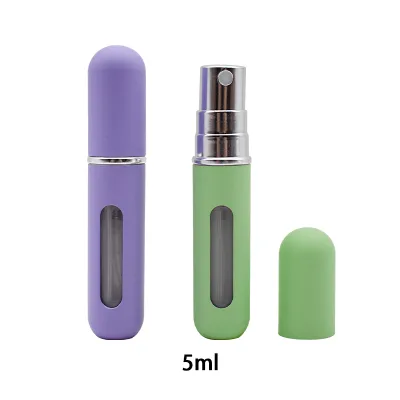
Verifying the technical performance of a perfume atomizer is paramount to ensuring a leak-proof seal and consistent dispensing. Key specifications to scrutinize include the discharge rate, which observed data suggests ranges from 0.10 to 0.14 ml per trigger press. This metric directly impacts the user experience, determining whether the spray is fine and mist-like or heavy and concentrated. Additionally, the closure type, often described as frosted or spray pump, must be evaluated for its ability to maintain a tight seal when not in use. The shape and size of the atomizer, such as the 5ml and 8ml variants with specific dimensions like 16.580mm and 17.5105mm, must align with ergonomic requirements and shelf-space constraints.
Material composition plays a crucial role in both durability and chemical compatibility. Products made from aluminum-plastic or PP materials must be tested for resistance to corrosion and degradation when exposed to various fragrance formulations. Buyers should verify the capacity range, which typically spans from 5 to 50 ml, and ensure that the internal pump mechanism is compatible with the viscosity of the intended perfume. The sealing type, identified as a pump sprayer in many listings, must be inspected for structural integrity, particularly at the junction between the pump head and the bottle neck, which is a common failure point for leaks.
Compliance and Safety Documentation
Compliance with international standards is essential for importing cosmetic packaging components, particularly when targeting regulated markets. Suppliers may provide certifications such as SGS or CE, which indicate adherence to specific safety and quality benchmarks. Buyers must request and verify these certificates to ensure that the materials used in the atomizer, including plastics and inks, are free from harmful substances like phthalates or heavy metals. Although background knowledge suggests the relevance of standards like ISO22716 for cosmetics manufacturing, buyers should confirm that the supplier’s documentation explicitly covers the packaging materials themselves, not just the final cosmetic product.
Safety documentation should also address the recyclability and environmental impact of the atomizer. Some listings highlight features such as being recyclable or degradable, which can be a significant selling point for eco-conscious brands. However, these claims require substantiation through material safety data sheets (MSDS) or environmental compliance reports. Buyers should inquire about the specific recycling codes associated with the plastic or aluminum-plastic components to ensure they align with local waste management regulations. Additionally, verifying that the supplier adheres to ethical labor practices, potentially through BSCI audits, can mitigate reputational risks associated with the supply chain.
Cost Drivers and Commercial Terms
Understanding the cost drivers for refillable perfume atomizers involves analyzing material costs, customization complexity, and order volume. The choice between plastic, aluminum-plastic, or PP materials significantly impacts the unit price, with metal-composite options generally commanding a premium due to their durability and aesthetic appeal. Customization features, such as logo printing, color matching, and unique packaging, add to the overall cost. Buyers should also consider the impact of MOQ on pricing, as higher volumes often result in lower unit costs, but require greater capital investment and storage capacity.
Commercial terms, including lead times and payment structures, are critical components of the procurement strategy. Typical lead times range from 15 to 30 days after receiving a deposit, with some suppliers requiring a 30% deposit before production begins. Sample times are generally short, around 2-3 days, allowing for rapid iteration and approval. Buyers should negotiate clear terms for freight costs, especially for samples, and establish penalties for delays in production. It is also advisable to clarify the warranty or replacement policy for defective units, ensuring that any quality issues are addressed without additional cost to the buyer.
Supplier Qualification and Quality Control
Supplier qualification is a multi-step process that begins with verifying the manufacturer’s capabilities and track record. Buyers should assess the supplier’s production capacity, quality control processes, and ability to handle OEM/ODM requests. Factories located in regions like Jiangsu or Ningbo in China are common sources for these products, but geographic location alone does not guarantee quality. It is essential to conduct a thorough audit of the supplier’s facilities, focusing on their injection molding, assembly, and testing procedures. Requesting references from existing clients can provide insights into the supplier’s reliability and consistency.
Quality control measures must be implemented at every stage of production, from raw material intake to final packaging. Buyers should define clear acceptance criteria for leak-proof performance, such as subjecting samples to pressure tests or inverted storage for extended periods. Incoming quality control (IQC) should verify that materials match the specified grades, while in-process quality control (IPQC) ensures that assembly tolerances are maintained. Final quality control (FQC) should include random sampling for visual defects, functional testing of the spray mechanism, and verification of packaging integrity. Establishing a robust quality agreement with the supplier can help prevent disputes and ensure consistent product quality.
Long-Term Procurement Checks
Long-term procurement success depends on continuous monitoring of supplier performance and market trends. Buyers should establish key performance indicators (KPIs) for delivery times, defect rates, and responsiveness to issues. Regular audits and performance reviews can help identify potential problems before they escalate, allowing for proactive management of the supply chain. Additionally, staying informed about changes in material regulations and consumer preferences can help buyers adapt their sourcing strategies to remain competitive. Building a diversified supplier base can mitigate risks associated with single-source dependencies, ensuring continuity of supply even in the face of disruptions.
Continuous improvement initiatives should be encouraged through regular feedback loops with suppliers. Sharing data on defect patterns or customer complaints can help suppliers refine their processes and improve product quality over time. Buyers should also explore opportunities for cost optimization through design standardization or volume consolidation, without compromising on quality or compliance. By maintaining a strategic focus on long-term partnerships and continuous improvement, procurement teams can secure a reliable supply of high-quality refillable leak-proof perfume atomizers that meet the evolving needs of their customers.
FAQs
What is the discharge rate for the perfume atomizer?
The discharge rate ranges from 0.10 to 0.14ml per trigger. This specification ensures consistent misting for cosmetics and personal care products while maintaining leak-proof performance during transport.
Can I get a free sample for this atomizer?
Samples are available free of charge, but freight costs must be collected from the buyer. This allows you to verify the pen shape design and frosted closure before placing a bulk order.
What is the lead time for production after deposit?
Production takes 15 days after receiving a 30% deposit. Some suppliers may offer a broader window of 15 to 30 days depending on order volume and specific customization requirements for the logo.
Which certifications are available for these atomizers?
Certifications such as SGS and CE are available for these products. These documents verify that the manufacturing process meets specific safety and quality standards required for exporting to international markets.
What customization options exist for the logo and color?
Customized colors and logos are acceptable through methods like silk screen, anodizing, engraving, or embossing. This flexibility supports branding needs for cosmetics and medicine packaging applications.
What is the minimum order quantity for this product?
The minimum order quantity varies, with some listings requiring 20,000 pieces while others accept 100 pieces. Buyers should verify the specific MOQ based on the chosen model and material type.
Which materials are used to construct these atomizers?
Materials include plastic, aluminum-plastic, and PP depending on the specific model. These materials ensure durability and compatibility with various cosmetic formulations while allowing for recyclable or degradable features.